Antisemitism is hate and hostility towards Jews. It’s racism. It’s been around for thousands of years, (because Jews have been around for thousands of years) but based on current events, antisemitism is growing in the US and in Europe, which is scary AF.
We exist for Jewish people, for people who aren’t Jewish but are part of a Jewish community, for anyone who has felt like a Jewish outsider, and especially for Disengaged Jews (DJs for short). That’s literally why our name/tagline is JewBelong: for when you feel you don’t!
Looking for Jewish goodness?
Discover Israeli creators and Jewish organizations doing meaningful work—and find ways to support them.
Antisemitism is hate and hostility towards Jews. It’s racism. It’s been around for thousands of years, (because Jews have been around for thousands of years) but based on current events, antisemitism is growing in the US and in Europe, which is scary AF.
We exist for Jewish people, for people who aren’t Jewish but are part of a Jewish community, for anyone who has felt like a Jewish outsider, and especially for Disengaged Jews (DJs for short). That’s literally why our name/tagline is JewBelong: for when you feel you don’t!
Looking for Jewish goodness?
Discover Israeli creators and Jewish organizations doing meaningful work—and find ways to support them.
The Haggadah is the playbook for Passover, but calling it a “book” misses the point. The word Haggadah comes from the Hebrew meaning to tell, to narrate, or to make known. Not to read quietly. Not to admire. To say out loud.
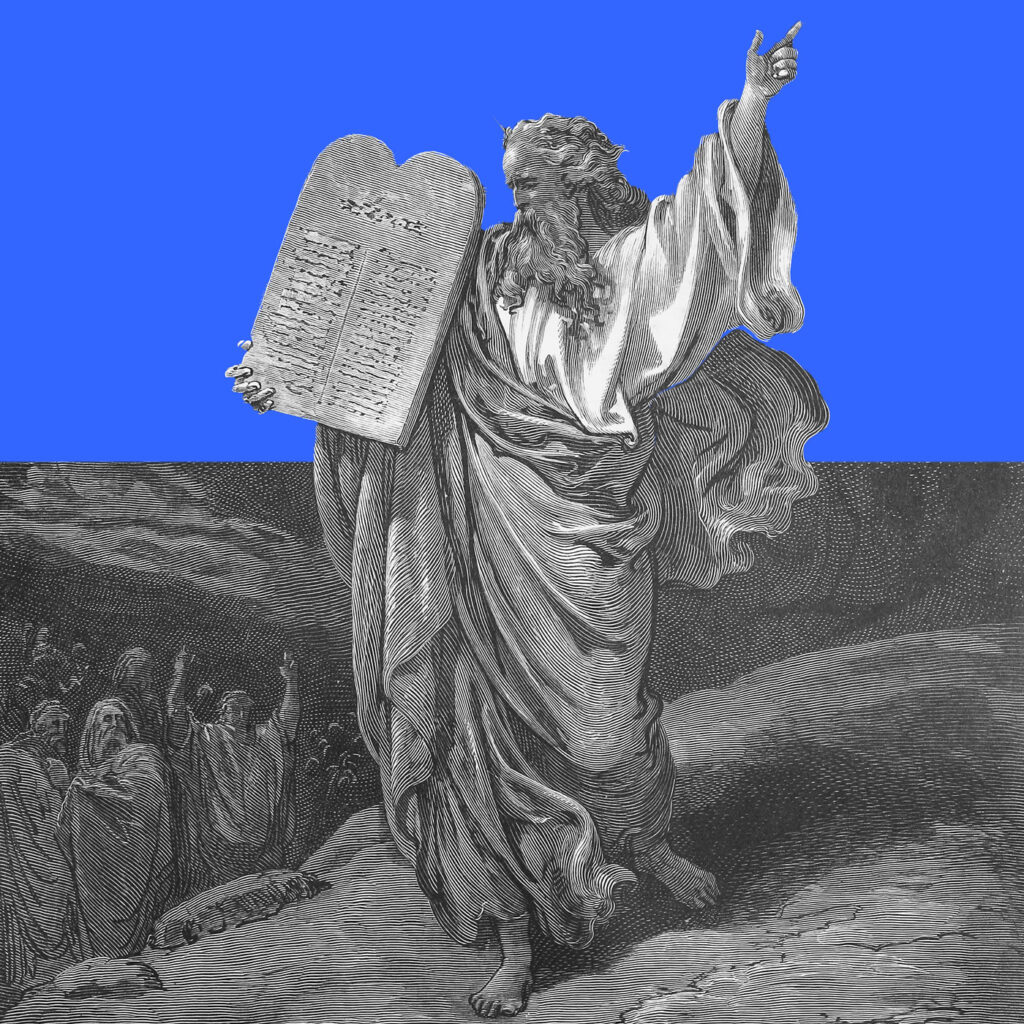
The Haggadah tells the story of the Exodus, aka the liberation of the Jews from slavery in Egypt and the cruel tyranny of the pharaoh. From slavery to the ten plagues to reaching Israel, it turns ancient oppression into present-day responsibility, reminding us that freedom is fragile.
What makes the Haggadah different from other books is that it expects participation. It invites questions, celebration, and involvement for all ages.
The Haggadah teaches that liberation isn’t something you commemorate once. It’s something you retell, wrestle with, and recommit to, generation after generation, around a table, with other people who refuse to forget.
And the JewBelong Haggadah also happens to be fun!
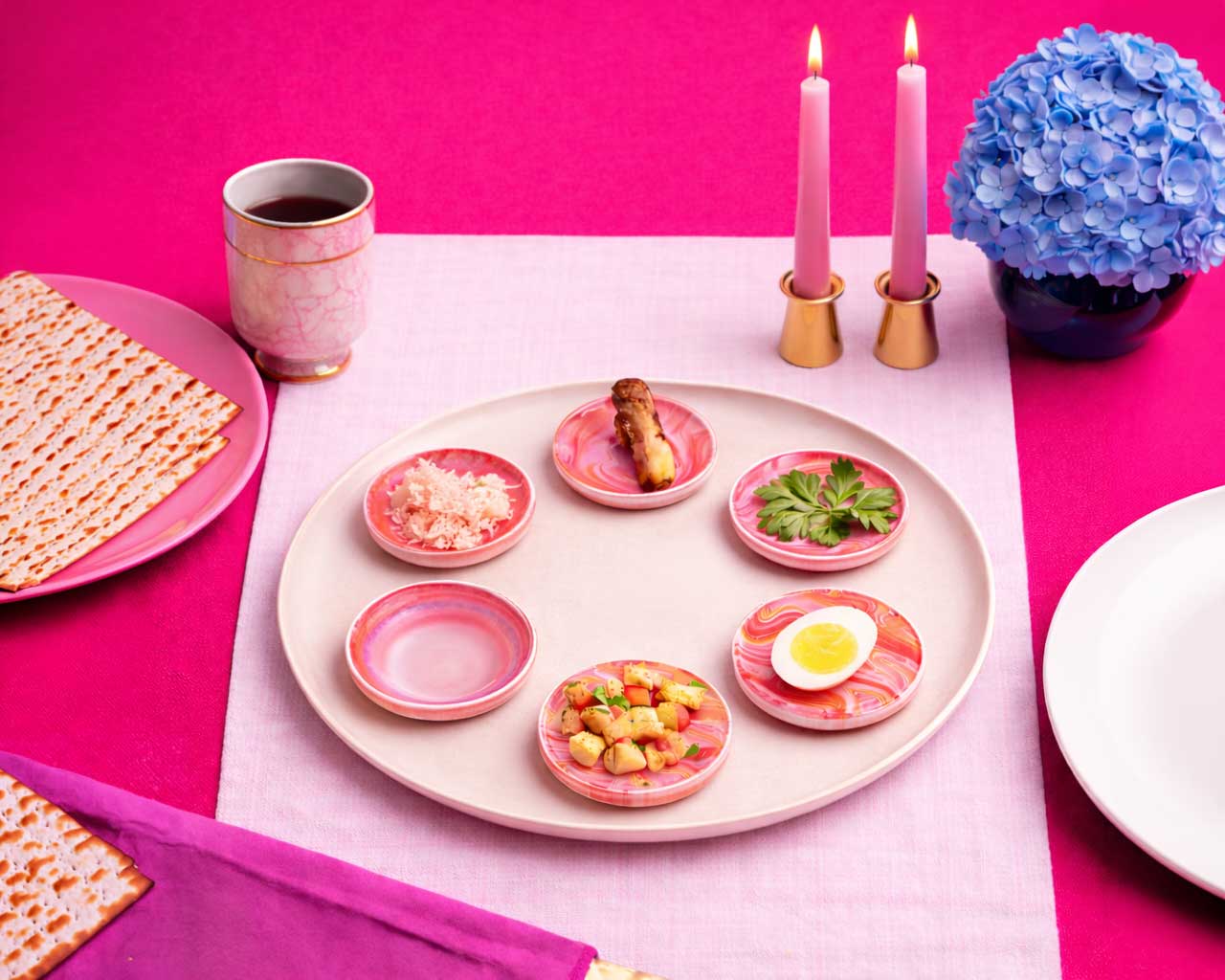
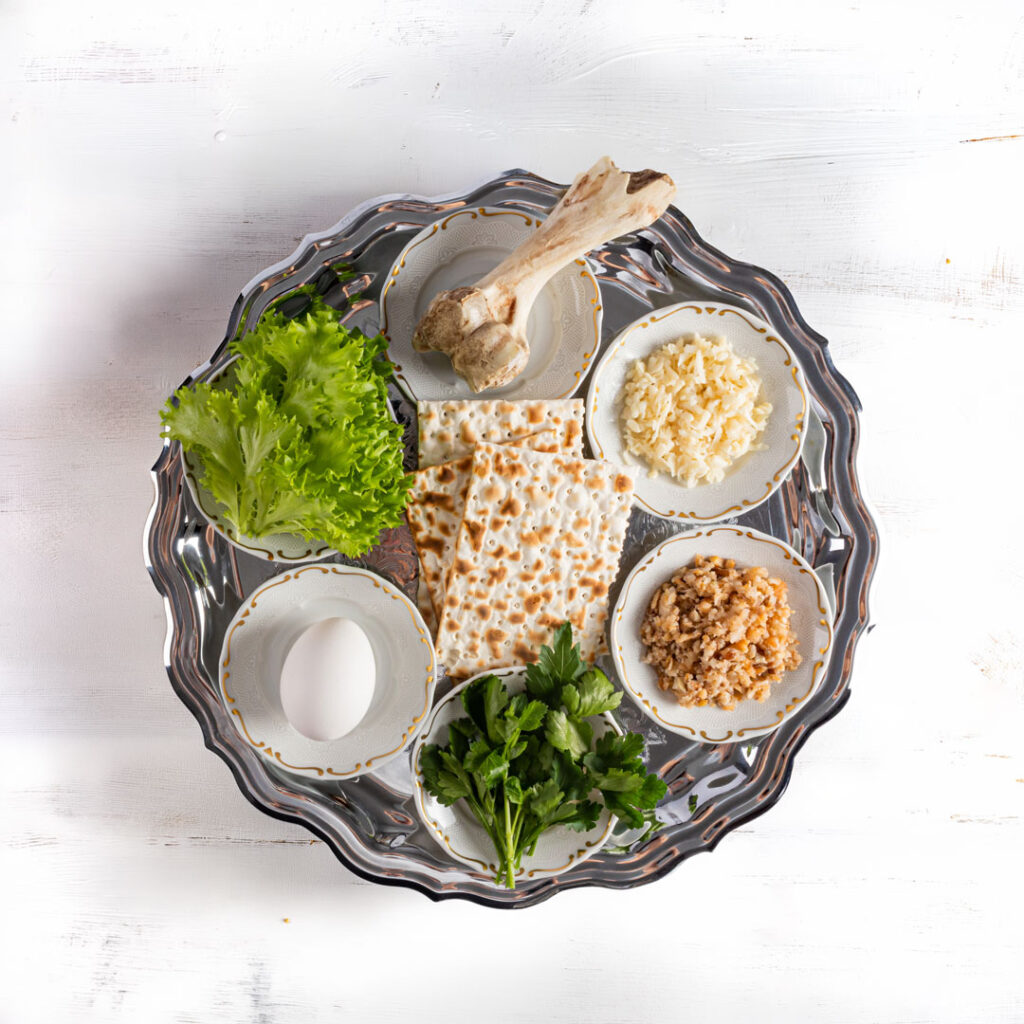
Besides the usual place settings, your table should be set with:
Roasted Lamb Shankbone: commemorates the lamb sacrifice the night the ancient Hebrews fled Egypt. (vegans/vegetarians can use a roasted beet instead)
Maror (bitter herb): usually horseradish, recalls the bitterness of slavery.
Charoset: a salad of chopped apples, nuts, wine, and cinnamon that symbolizes the mortar used by Hebrew slaves to make bricks.
Karpas: usually parsley but any spring green will do, that symbolizes the freshness of spring.
Salt Water: symbolizes the tears and sweat of our ancestors who were slaves.
Roasted Egg: symbolizes springtime and renewal.
NEW Orange: symbolizes the inclusion of marginalized members of the Jewish community including women and LGBTQ+ individuals. We spit out the seeds of homophobia.
A Seder meal isn’t just dinner, it’s storytelling you can eat. Every food on the table is there on purpose, because Judaism loves a metaphor and we can trust snacks to do the teaching. The Seder plate anchors it all: symbolism, but make it food.
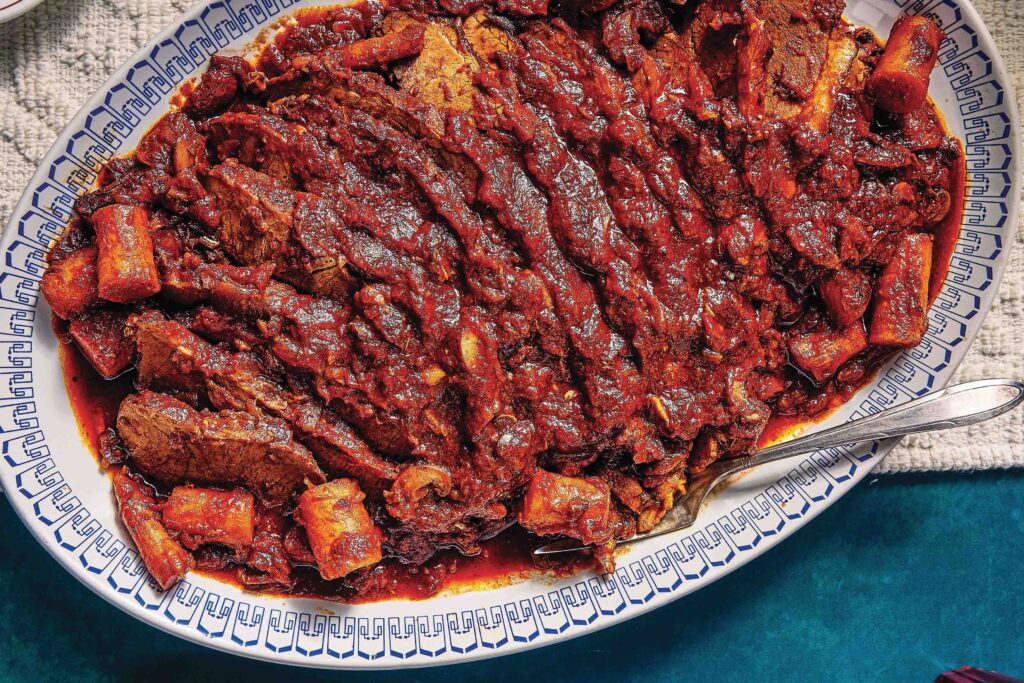
Then comes the actual meal, which varies wildly by family, geography, and grandma. Ashkenazi tables might feature brisket, chicken soup, kugel, and potatoes carrying the work of carbs without bread. Sephardi and Mizrahi Seders may bring rice, lamb, fresh herbs, citrus, and spices that smell like freedom in surround sound. None of this is accidental. It reflects how Jews survived and celebrated wherever we landed.
The real rule? The food should make people stay at the table. It should spark memories, arguments, laughter, and second helpings. A good Seder meal nourishes bodies and reinforces the core message of Passover: we were slaves, now we’re free, and freedom deserves to be enjoyed together.
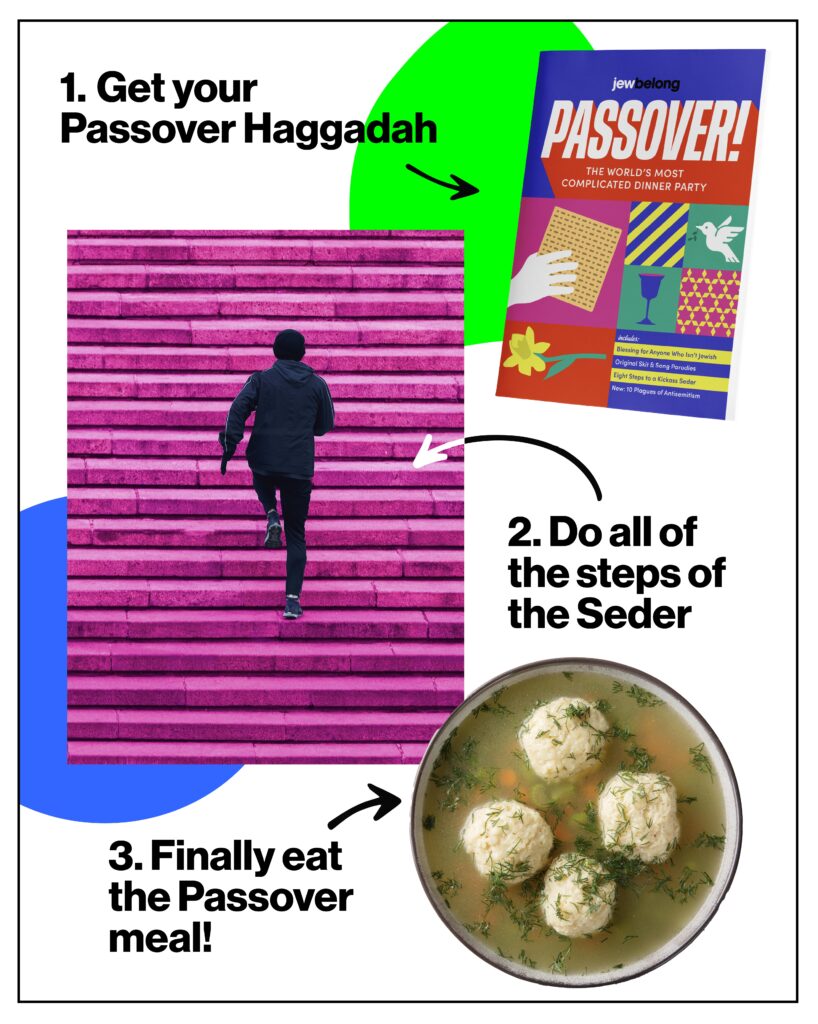
The Passover Seder follows a traditional order of 14 steps, guiding participants through the retelling of the Exodus from Egypt. From blessings over wine and matzah to telling the Passover story and sharing a festive meal, each step has a specific purpose and meaning. Whether you’re hosting for the first time or brushing up on the basics, this guide explains each part of the Seder clearly and accessibly.
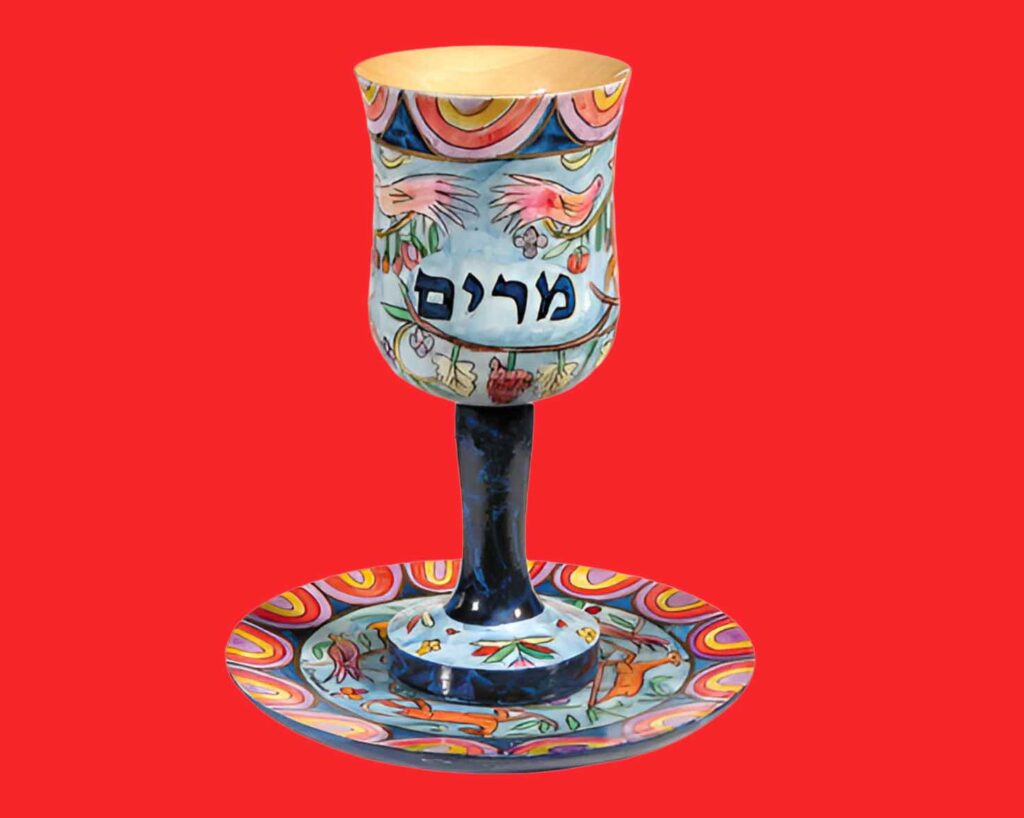
Kiddush Blessing Over Wine — KADESH (קַדֵּשׁ)
The Seder begins with Kiddush, the blessing over the first cup of wine or grape juice. This step sanctifies the holiday and formally opens the Passover meal.
Ritual Hand-Washing (First) — URCHATZ (וּרְחַץ)
Participants wash their hands without a blessing, preparing spiritually and physically for the Seder rituals to come. This washing is connected to the upcoming dipping of vegetables.
Dipping Greens in Salt Water — KARPAS (כַּרְפַּס)
A green vegetable, often parsley, is dipped in salt water and eaten. The greens symbolize spring and renewal, while the salt water represents the tears of slavery in Egypt.
Breaking the Middle Matzah — YACHATZ (יַחַץ)
The middle of three matzot is broken in two. The larger portion is set aside as the afikomen, which will be eaten later in the Seder.
Telling the Story of Passover — MAGGID (מַגִּיד)
This central section of the Seder retells the story of the Exodus from Egypt. It includes the Four Questions, discussion, and reflection on the meaning of freedom.
Ritual Hand-Washing (Second) — RACHTZAH (רָחְצָה)
Hands are washed again, this time with a blessing, in preparation for eating matzah. This mirrors the traditional hand-washing before eating bread.
Blessing Over Meal and Matzah — MOTZI MATZAH (מוֹצִיא מַצָּה)
Two blessings are recited before eating matzah: one for bread and one specific to the commandment of eating matzah on Passover.
Eating the Bitter Herb — MAROR (מָרוֹר)
Bitter herbs, often horseradish or romaine lettuce, are eaten to recall the bitterness of slavery. They are typically dipped in charoset, a sweet mixture symbolizing the mortar used by the Israelites.
Eating the Matzah and Bitter Herb Sandwich — KOREICH (כּוֹרֵךְ)
Matzah, bitter herbs and charoset are combined into a sandwich, following the practice attributed to Hillel during the Temple era.
Eating the Festive Meal — SHULCHAN OREICH (שֻׁלְחָן עוֹרֵךְ)
The Seder meal is served. While customs vary widely, this is the time for the main course and shared celebration.
Eating the Afikomen — TZAFUN (צָפוּן)
The hidden afikomen is retrieved and eaten as the final food of the evening. It serves as a reminder of the Passover sacrifice eaten in ancient times.
Grace After Meals and Welcoming Elijah — BAREICH (בָּרֵךְ)
Birkat Hamazon (Grace After Meals) is recited, and an additional cup of wine is poured for the prophet Elijah, symbolizing hope and future redemption.
Songs of Praise — HALLEL (הַלֵּל)
Psalms and songs of praise are recited, expressing gratitude for freedom and divine deliverance.
Conclusion of the Seder — NIRTZAH (נִרְצָה)
The Seder concludes with a prayer that the service has been accepted and with the traditional hope: “Next year, in Jerusalem.”
Are you attending as a guest and are really confused? Here are some FAQs to get you through the longest meal in Judaism.
Don’t think too hard! You can always just say “Happy Passover” in English. Or if you’re feeling fancy, in Hebrew, “Chag Pesach Sameach” (pronounced khahg PEH-sahkh sah-ME-akh), which literally means “Happy Passover Holiday.” If you want something shorter that works for any Jewish holiday, you can say “Chag Sameach” (pronounced khahg sah-ME-akh), which simply means “Happy Holiday.” Either way, a smile and good wishes go a long way at the Seder table!
Any gift you would bring for a housewarming would work here with one extra rule: if you’re bringing food or wine, make sure it’s kosher for Passover. Unsure of what this means? Check out our Kosher for Passover guide here! Judaica art and literature might be appreciated, but know your audience: a less religious household might not want a giant framed poster of the Kotel or ANOTHER menorah. Find some gift ideas on our Shop Israel page and bring something beautiful from the homeland.
While Orthodox homes might limit their guest lists to strictly Jews, more modern homes embrace the idea of “welcoming the stranger,” a core tenet of Judaism (seriously, the Torah commands it 36 times). If you’re not Jewish, or are just really lost around the Hebrew, do your best if invited to read a passage from the Haggadah. This is a participatory and social meal, your unique perspective is welcome!
If you’re not familiar with the Seder, wait until you see other people doing things (washing hands, eating dishes, drinking wine) and follow along. Unless you’re a real heavyweight, try and restrict your drinking to when the steps of the Seder call for it. If we haven’t made it clear enough yet, it’s a lot of wine. It’s also a wise idea to have a little snack before showing up, especially if you get hangry while waiting to eat.
Passover isn’t just about celebrating our freedom from long ago. It represents new life in the land that Jewish people have been inhabiting for over 3,000 years since the Exodus: Israel. And so we end our Seder meal by saying “Next year, in Jerusalem!” to represent our collective belonging in the home that the Jewish community is indigenous to.
The Haggadah (pronounced huh-GAH-duh) is the guidebook for the Passover Seder. Its main purpose is to tell the story of the Israelites’ Exodus from Egypt while leading everyone through the blessings, songs, and symbolic foods. Think of it as the script for your Seder, helping you make the ancient story come alive each year.
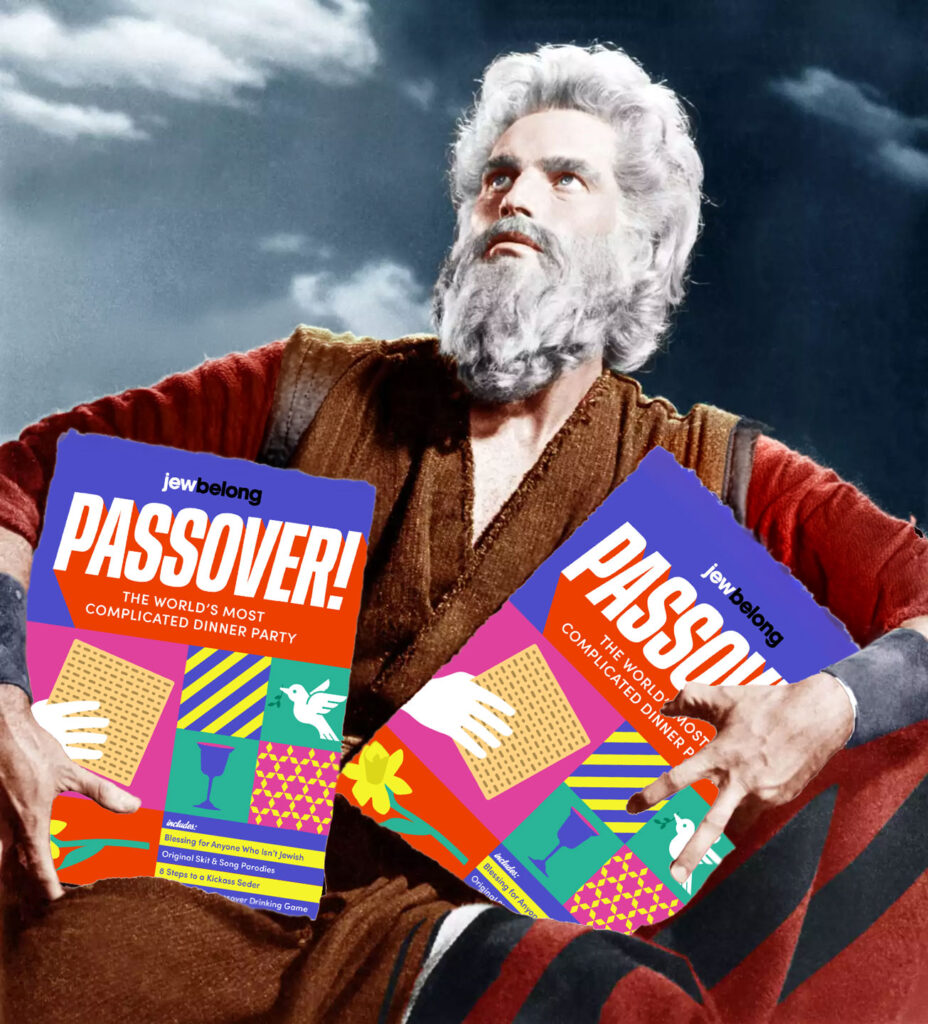
JewBelong’s beautiful Passover Haggadah includes all of the traditional Passover blessings, plus song parodies, an original skit for all ages, Seder coffee to wake us up to the modern-day Ten Plagues of Antisemitism, and more.
Enter your email to access this amazing free resource.