Five days after Yom Kippur, Judaism does a complete mood flip. The Day of Atonement is solemn, hungry, and heavy on the soul-searching. Then Sukkot (soo-KOTE) starts and basically says: great work on all that reflection, now go eat dinner in a hut you built in your backyard. If you’ve never heard of it, no JewBarrassment here. Sukkot is one of the happiest holidays on the Jewish calendar – yet somehow, a surprising few people have heard of it. Let’s fix that.
Sukkot 101: The Harvest Festival You Build Yourself
Sukkot is a 7-day festival that begins on the 15th of Tishrei (TISH-ray), the first month of the Jewish civil calendar – and the same month that brings us Rosh Hashanah and Yom Kippur. In 2026, Sukkot begins at sundown on Friday, September 25 and ends at nightfall on Friday, October 2.
You may have heard it called the Feast of Tabernacles, the Feast of Booths, or the Festival of Booths. Same holiday, different translations. “Sukkot” is simply the plural of sukkah (SOOK-ah), the temporary hut at the center of the whole celebration. It’s also known as a harvest festival, which is your first clue that this holiday is basically Jewish Thanksgiving with better decorations and a weeklong run.
After the emotional workout of the High Holidays, Sukkot is the exhale. The Torah literally commands joy on this holiday. Yes, being happy is the assignment. We told you Judaism could surprise you.
Why a Hut? The Story Behind the Sukkah
The sukkah has two origin stories, and both are true.
The first is historical. After the Exodus from Egypt, the Israelites spent 40 years wandering the desert, living in temporary dwellings the whole way. The sukkah commemorates those fragile shelters and the idea that our ancestors, fresh out of slavery in Egypt, made it through with nothing sturdier than faith and some very basic architecture.
The second is agricultural. In ancient Israel, Sukkot marked the fall harvest, when farmers would live in temporary shelters out in the fields to gather crops before the winter rains. The Hebrew Bible calls it the Festival of Ingathering, a time to feel genuine gratitude for abundance.
Sukkot is also one of the three pilgrimage festivals, along with Passover and Shavuot. In ancient times, Jewish people would travel to the Temple in Jerusalem to celebrate together. Although the Temple no longer stands, the theme of gathering never left. Sukkot is still a holiday best celebrated with a crowd, preferably one that brings dessert.
So the sukkah holds history, harvest, and a bigger idea that hits you while you’re sitting in it: everything is temporary, and that’s exactly why gratitude matters.
The Four Species: A Bouquet Like No Other
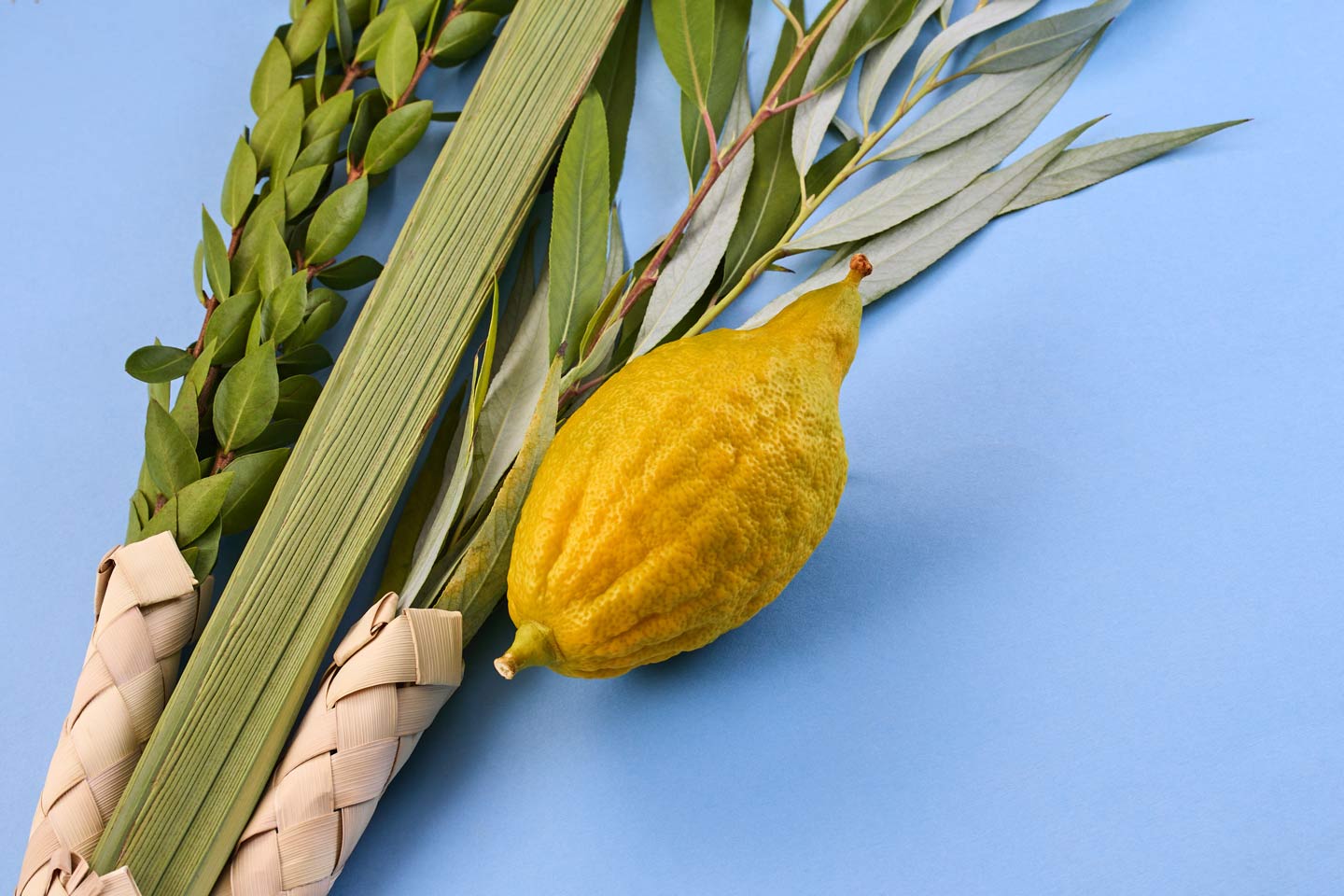
Sukkot comes with a ritual that involves shaking plants, and we promise it’s less strange than it sounds. The four species, called the arba minim (ar-BAH mee-NEEM, literally “four kinds”), are:
- Lulav (LOO-lahv): a palm branch, the tall centerpiece of the bundle
- Etrog (EH-trohg): a citron, which looks like a lemon that’s been hitting the gym
- Hadassim: myrtle branches
- Aravot (ah-rah-VOTE): willow branches
The palm fronds, myrtle, and willow branches get bundled together, the etrog is held alongside, and the whole arrangement is waved in six directions: north, south, east, west, up, and down. Why? The classic interpretation is that it acknowledges God is everywhere.
Another interpretation says the four species represent four kinds of people: (1) book-smart but not much kindness, (2) kindness but no wisdom, (3) annoying overachievers who’ve got both, and (4) poor souls without either. They’re bundled together because Jewish community means everybody – not just the ones who smell nice (that would be the myrtle).
You don’t need to own a lulav and etrog to celebrate Sukkot. But if someone hands you one and shows you how to shake it, say yes. It’s a genuinely fun thirty seconds.
What Actually Happens During Sukkot
The main event is simple: build a sukkah, then eat in it. A sukkah needs at least three walls and a roof made of natural materials (branches, bamboo, corn stalks) that’s thick enough for shade but loose enough to see stars through. Think: glamping… by Target. Decorating is where families go big. Paper chains, hanging fruit, kids’ artwork, string lights. There is no such thing as an overdecorated sukkah.
Meals in the sukkah often start with Kiddush (KID-ish), the blessing over wine or grape juice, and the first two days typically include festive dinners with the works. Bonus points for sleeping in your sukkah – having a magical family campout or learning the hard way why our ancestors were so thrilled to reach the Promised Land – depending on the weather.
There’s also a beautiful tradition called ushpizin (oosh-pee-ZEEN), an Aramaic word meaning “guests.” Each night, a different biblical ancestor is symbolically welcomed into the sukkah, and many families take the idea literally by inviting friends and neighbors to join them. Hospitality is baked into this holiday. If you’re invited to someone’s sukkah, go. Bring something sweet.
The first two days of Sukkot are full-on festival days. The middle days downshift into Chol HaMoed (khol hah-MOH-ed), “the weekdays of the festival,” when regular life mostly resumes but lowkey celebrating continues. One quirk worth knowing: the four species aren’t waved on Shabbat, even during Sukkot.
Want to greet someone during the holiday? “Chag Sameach” (KHAG sah-MAY-akh) means “happy holiday,” and it works for the entire week. Chag simply means festival, and this one earns the name.
The Grand Finale: Shemini Atzeret and Simchat Torah
Just when you think the party’s over, the Jewish calendar adds an encore. Shemini Atzeret (sh’MEE-nee aht-SEH-ret) lands right after Sukkot’s seventh day. What’s it about? Honestly, even the experts shrug a little. The best translation is something like “the eighth day of pausing” – as if God said: “You know what? Let’s stay one more day, this has been nice.”
Then comes Simchat Torah (seem-KHAT toh-RAH), “Rejoicing with the Torah,” which celebrates finishing the yearlong cycle of Torah readings – and immediately starting over from the beginning. (Judaism doesn’t really believe in season finales.) Synagogues erupt with singing, dancing, and Torah scrolls carried in joyful laps around the room. It is, hands down, one of the most fun nights of the Jewish year.
Make It Your Own
Sukkot can happen almost anywhere: Eat dinner outside, gather friends, look up at the sky, and you’ve already captured part of what the holiday is about. Host a fall harvest meal for people you love. Say yes to a friend’s sukkah invitation. Reflect on what shelter means to you, and on the good stuff in your life that deserves a thank you.
Sukkot asks one thing of you: be joyful. That’s a mitzvah we can all get behind.
Want more help navigating the season? Our free High Holidays booklet is pretty fantastic, and did we mention it’s free? Download it here!
Check out our overview of Sukkot and other holidays, and sign up for our newsletter so you never miss a holiday, a recipe, or a reason to celebrate.
Sukkot FAQs
When is Sukkot in 2026?
Sukkot 2026 begins at sundown on Friday, September 25, and ends at nightfall on Friday, October 2. Shemini Atzeret and Simchat Torah follow immediately, wrapping up on October 4.
What is forbidden on Sukkot?
It depends on the day. The first two days of Sukkot are yom tov, festival days similar to Shabbat, when traditional observance avoids work. The intermediate days, Chol HaMoed, are far more relaxed, and most regular activities resume. As always, observance varies widely, and at JewBelong we’re big believers in you doing you.
Can you get married between Yom Kippur and Sukkot?
Yes! The days between Yom Kippur and Sukkot are considered a happy stretch of the calendar, since everyone’s fresh off the Day of Atonement with a clean slate. Weddings generally don’t take place on the festival days of Sukkot itself, but the days before are a different story, so check with your officiant.
What happens in synagogue during Sukkot?
Services during Sukkot include Hallel (hah-LAYL), a collection of joyful psalms of praise, and hoshanot (hoh-shah-NOTE), processional prayers recited while circling the sanctuary holding the four species. If you’ve never seen a room full of people parading with palm branches, it’s worth showing up just for that.