Passover Prayers and Blessings
If you’ve ever sat at a Passover Seder and watched someone open a book, start speaking in Hebrew, and wondered what on earth was happening, you’re not alone. The blessings and prayers woven throughout Passover, also known as Pesach (PEH-sakh) in Hebrew, are beautiful, meaningful, and honestly a little confusing if no one’s ever walked you through them. That’s where JewBelong comes in. Whether you’re showing up to your first Seder, hosting one for the first time, or just trying to feel a little less lost than last year, we’ve got you. No Hebrew school required. No JewBarrassment® here.
So pull up a chair at the Seder table, take a look at that mysterious Seder plate in the center (more on that in a second), and let’s walk through some of the most meaningful Passover prayers and blessings together. For more, download our free Haggadah.
What Are Passover Blessings
and Do I Have to Say Them in Hebrew?
Let’s get this out of the way first: no, you don’t have to say the Passover blessings in Hebrew. There, we said it.
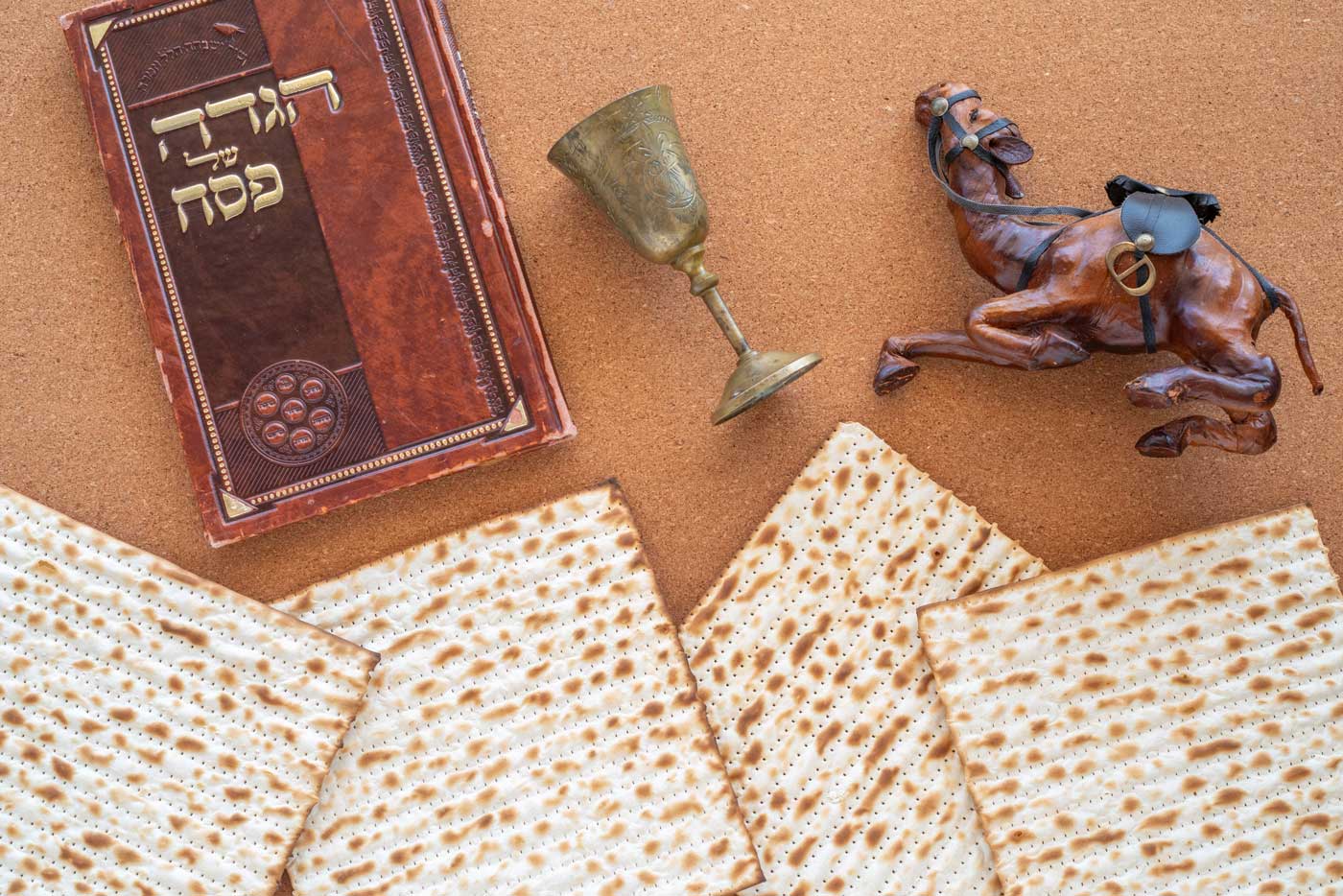
The prayers and blessings said during Passover come from the Haggadah: the book that guides you through the Seder, step by step. Some families go through every word. Others pick and choose. Some read in Hebrew, some in English, some in a mix of both, and some just kind of wing it while someone’s cousin Googles the next part. All of it counts.
What the Passover blessings are really doing is taking seemingly ordinary acts like lighting candles, lifting a glass, and breaking matzah, and turning them into sacred pauses, little reminders that freedom, memory, and gratitude deserve our full attention.. They’re a way of saying: this moment matters. And that’s something anyone can get behind, regardless of where you are on your Jewish journey.
That said, if you want to follow along in Hebrew, we’ll give you the transliteration (that’s the Hebrew written out in English letters so you can actually say it). No shame in reading phonetically. Honestly, most people at the table are doing the same thing.
The Night Before Passover
The Passover Prayer for Searching and Removing Leaven

Here’s something most people don’t know: the prep for Passover actually starts the night before the Seder, with a ritual called Bedikat Chametz (beh-dee-KAT kha-METZ): the search for leaven. Chametz is any food made from fermented grain, like bread, pasta, or cereal. During Passover, it’s a no-go, and the tradition is to search your home for any remaining chametz the night before the holiday begins.
Yes, this means literally walking around your house with a candle (or flashlight, we won’t judge) looking for bread crumbs. Some families make it a game for the kids, hiding pieces of bread around the house to find. It’s kind of a great excuse to also clean out the back of the pantry.
The blessing said before the search goes like this:
Transliteration: Baruch Atah Adonai, Eloheinu Melech haolam, asher kid’shanu b’mitzvotav v’tzivanu al bi’ur chametz.
English: Blessed are You, Eternal our God, Sovereign of the universe, who has sanctified us with Your commandments and commanded us concerning the removal of chametz.
After the search, there’s a short declaration that basically says any chametz you might have missed is hereby null and void. Think of it as a spiritual insurance policy.
The First Night of Passover
Passover Candle Lighting Prayer
The Seder begins, like most Jewish holidays, with lighting candles. Two candles are lit to welcome the holiday, and the person lighting them (traditionally but not exclusively women as this is a JewBelong Seder and everyone’s welcome) recites a blessing.
Transliteration: Baruch Atah Adonai, Eloheinu Melech haolam, asher kid’shanu b’mitzvotav v’tzivanu l’hadlik ner shel Yom Tov.
English: Blessed are You, Eternal our God, Sovereign of the universe, who has sanctified us with Your commandments and commanded us to kindle the holiday light.
On most nights, a second blessing called the Shehecheyanu is added. It’s a general blessing of gratitude for reaching a new season or milestone. It’s one of the most beautiful and universal blessings in Judaism, and honestly, it kind of gives you the feels.
Transliteration: Baruch Atah Adonai, Eloheinu Melech haolam, shehecheyanu v’kiy’manu v’higianu laz’man hazeh.
English: Blessed are You, Eternal our God, Sovereign of the universe, who has kept us alive, sustained us, and brought us to this season.
Passover Blessing for Children
At many Seders, one of the most tender moments of the evening, and one that often catches people off guard, is the blessing of the children. Before or during the meal, parents (or grandparents, aunts, uncles, whoever is doing the honors) place their hands on each child’s head and offer a blessing.
For boys, the traditional blessing invokes the biblical figures Ephraim and Manasseh. For girls, it invokes the matriarchs Sarah, Rebecca, Rachel, and Leah. Many families today use a version that works for all children, or add their own personal words. There’s no wrong way to bless a kid you love.
The Kiddush: Passover Blessing Over the Wine
Now we’re talking. The Kiddush (KID-ish) is the blessing over the wine, and at Passover it’s a big deal. There are actually four cups of wine drunk throughout the Seder, each one marking a different stage of the evening. The Kiddush is said over the first cup.
Wine at Passover represents joy and freedom, which feels very appropriate. Grape juice works too, and nobody will look at you sideways for choosing it.
The Passover Kiddush is longer than the regular Friday night version, so don’t be alarmed if it goes on for a bit. Your Haggadah will have the full text so just follow along, lift your cup when everyone else does, and drink when they drink. You’ve got this.
The Four Questions: Mah Nishtanah
Right after the Kiddush, the Haggadah kicks off the storytelling portion of the evening. And it does so in a pretty charming way. The youngest person at the table who is able chants (or reads) the Mah Nishtanah (mah nish-TAH-nah), which means “what is different” in Hebrew. It’s a set of four questions that all start the same way: Why is this night different from all other nights?
The questions ask about things on the Seder table that are distinctly Passover: Why do we eat matzah? Why do we eat bitter herbs? Why do we dip foods twice? Why do we recline while eating? The rest of the Seder is essentially the answer: the story of how the Israelites were enslaved in Egypt and won their freedom.
It’s one of the most beloved traditions of the evening, and if the youngest kid at your table is shy about it, there is absolutely no pressure. Someone else can step in. The point is the asking, not the performer.
Passover Blessing Over Matzah
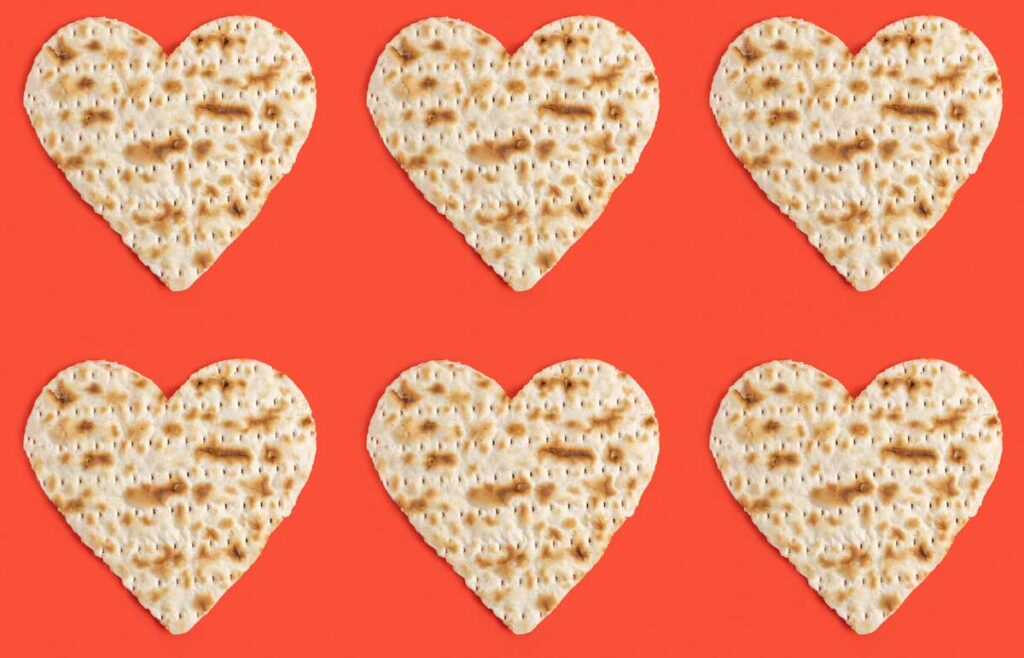
Matzah (MAHT-zah), that flat, cracker-like unleavened bread, is the symbol of Passover. It represents the bread that didn’t have time to rise when the Israelites fled Egypt in a hurry. Before eating it at the Seder, two blessings are said: the regular blessing over bread (Hamotzi), and a special Passover-specific blessing (Al Achilat Matzah).
Transliteration: Baruch Atah Adonai, Eloheinu Melech haolam, asher kid’shanu b’mitzvotav v’tzivanu al achilat matzah.
English: Blessed are You, Eternal our God, Sovereign of the universe, who has sanctified us with Your commandments and commanded us concerning the eating of matzah.
Pro tip: hold the matzah up during the blessing, break it, and share a piece with everyone at the table (it’s a little more complex at more religious Seders). Very satisfying, although the crumbly cleanup is less fun…
Dayenu: The Passover Prayer
That Says "It Would Have Been Enough"
If there’s one Passover prayer that gets stuck in your head for weeks, it’s Dayenu (die-AY-noo). The word means “it would have been enough” in Hebrew, and the song lists all the things God did for the Jewish people during the Exodus. After each one, everyone sings dayenu, essentially saying: even just that would have been enough. We’re grateful.
The story it’s drawing from is the heart of Pesach itself: the Israelites were enslaved in Egypt, and God sent ten plagues to convince Pharaoh to let them go: everything from locusts to darkness to the death of the firstborn. The Egyptians eventually relented, and the Jewish people fled toward freedom. Dayenu celebrates each step of that journey, from the plagues all the way to arriving in the promised land.
It’s joyful, it’s repetitive (in the best way), and even if you don’t know the Hebrew, you’ll be singing along by verse three. Dayenu has become one of the most beloved moments of the Seder — a reminder to practice gratitude even when things aren’t perfect. Which, TBH, is pretty good life advice.
During Passover
Passover Seder Blessings:
What Comes After the First Night?
Passover lasts eight days (seven in Israel and for some Reform Jews), and while the big blessings happen at the Seder on the first night, or first two nights if your family does two Seders, the holiday continues beyond that.
During Passover, the Hallel (hah-LEHL), a collection of psalms of praise, is recited or sung, either at the Seder or during synagogue services. Special prayers are also added to the daily worship for those who pray regularly. And if Passover falls on Shabbat, the Shabbat candle lighting blessing gets a special Passover twist.
But here’s the thing: you don’t have to do all of it, or any of it, to have a meaningful Passover. Even just showing up to a Seder, asking questions, and eating your body weight in matzah is a perfectly valid way to celebrate. Judaism is, at its core, about connection, to each other, to our shared history, and to meaning. The blessings are just one way to get there.
Want to Go Deeper?
JewBelong has a pretty fantastic free Passover Haggadah that walks you through the entire Seder: blessings, prayers, songs, and all, in plain English (with Hebrew and transliteration too). It’s warm, it’s funny, and it won’t make you feel like you’re back in a classroom. Download it for free, and feel free to print as many copies as you need for your table. Or, take the plunge and buy it from Amazon (we sell it AT COST).
Because everyone deserves a Seder where they feel like they belong.