Rosh Hashanah, which means “head of the year” in Hebrew, is the Jewish New Year and one of the most significant Jewish holidays on the calendar. It falls on the first and second days of Tishrei, the first month of the Hebrew calendar year, usually sometime in September or October. And while “new year” might make you think of champagne and countdowns, Rosh Hashanah has a different kind of energy. It’s a time to reflect on the past year, look ahead to the coming year, and reconnect with what matters most.
Rosh Hashanah kicks off the High Holidays, a ten-day stretch of reflection and renewal that ends with Yom Kippur, the Day of Atonement. These ten days are also called the Days of Awe, and together they’re considered the holiest period in the Jewish year.
Not sure where to begin? Our free High Holidays booklet is a pretty fantastic place to start. No prior knowledge required.
Getting Ready: The Hebrew Month of Elul
The Hebrew month of Elul, the month before Rosh Hashanah, is traditionally a time of preparation. Think of it as a spiritual runway before the Jewish New Year. Elul is associated with teshuvah, a Hebrew word often translated as “repentance,” but really meaning something closer to “return.” As in, returning to your better self, the people you may have hurt, and the values that matter most to you. Some people use Elul to reflect, reach out to someone they’ve lost touch with, or simply get their head and heart in the right place before the holiday arrives.
Rosh Hashanah Traditions at Home
Some of the most meaningful Rosh Hashanah traditions happen right at your own table.
Symbolic Foods for a Sweet New Year
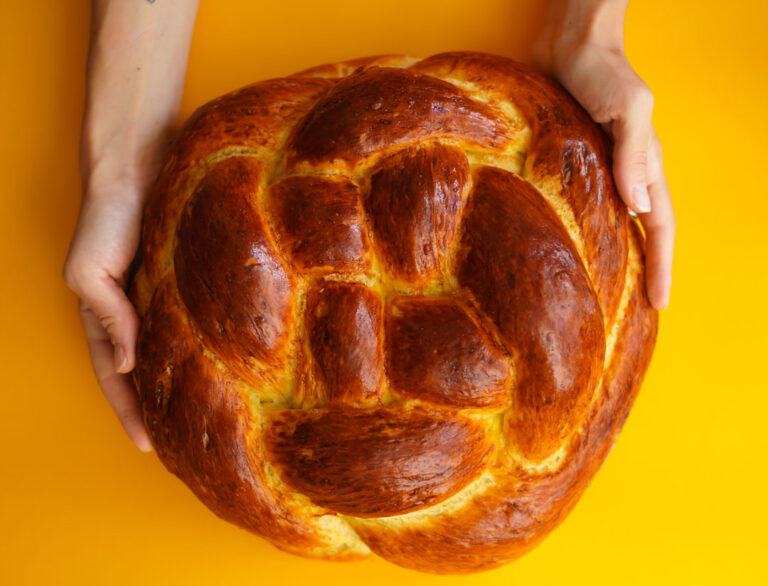
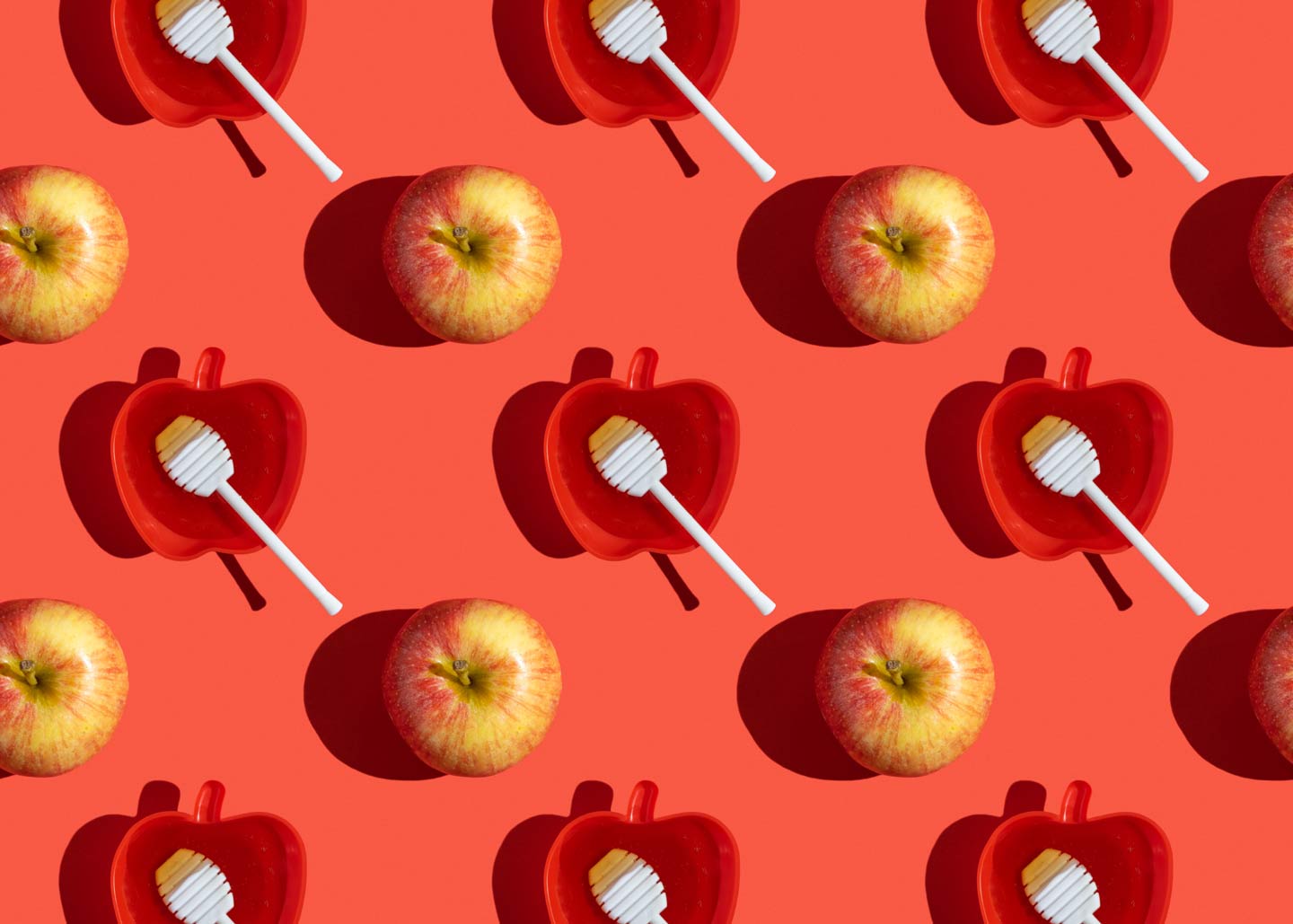
Food is a big deal on Rosh Hashanah, and a lot of it is symbolic. The most well-known tradition is dipping apples in honey to wish for a sweet new year. Simple, delicious, and genuinely lovely. Pomegranates are another classic. Their many seeds represent the hope for a year full of good deeds. Round challah, rather than the classic braided loaf you might see on Shabbat, shows up on Rosh Hashanah too, its circular shape a nod to the cycle of the year.
On the second night of Rosh Hashanah, there’s a tradition of eating a new fruit, something you haven’t tasted yet this season, and reciting a blessing called the Shehecheyanu, which marks new and meaningful moments.
In some Sephardic Jewish communities, a fish head makes an appearance at the table, another symbol of hoping to be at the “head” of the new year rather than the tail.
For recipe ideas and more on Rosh Hashanah foods, check out JewBelong’s recipes in our Blog.
Festive Meals and Kiddush
Rosh Hashanah meals are festive by design. Like Shabbat, the holiday is welcomed at sundown with candle lighting and the Kiddush, a blessing recited over wine or grape juice. The table is usually set with care, the food is plentiful, and the general vibe is: we made it through another year, let’s celebrate that.
If you’re hosting or attending a Rosh Hashanah dinner for the first time, don’t overthink it. Good food, good company, and a little honey on the side is a perfectly solid start.
Saying Shanah Tovah
“Shanah Tovah” (שנה טובה) is the classic Rosh Hashanah greeting. It means “good year,” and you’ll hear it everywhere during the holiday season. The fuller version, “Shanah Tovah U’Metukah,” means “a good and sweet new year.” You might also hear people wish each other a good inscription in the Book of Life, a reference to the Jewish tradition that on Rosh Hashanah, the fate of the coming year begins to be written. Cards, texts, calls to family members you’ve been meaning to check in with… all of it counts.
Rosh Hashanah Traditions at Synagogue
For a lot of Jewish people, Rosh Hashanah is one of the times that they’re most likely to show up at synagogue, sometimes the only time. No judgment here. Synagogue on Rosh Hashanah has its own particular atmosphere: full pews, familiar melodies, and the shofar.
The Sounding of the Shofar
The shofar is a ram’s horn that’s been sounded on Rosh Hashanah for thousands of years. It’s one of the most distinctive sounds in all of Judaism. The sounding of the shofar is central to Rosh Hashanah services, and there are actually several distinct blasts: tekiah (one long note), shevarim (three shorter wailing notes), and teruah (a rapid series of short notes). Hearing it in person is something else entirely.
The shofar is meant to wake people up. Literally and spiritually. It’s a call to pay attention, to take stock, to do better. Synagogues also sound the shofar at the end of Yom Kippur, making it the sound that opens and closes the High Holiday season.
Torah Readings and Prayer
Rosh Hashanah services include special Torah readings and prayers specific to the holiday. The prayer book used during the High Holidays is called the machzor, and the liturgy is longer and more elaborate than a typical Shabbat service. Some of the prayers date back centuries and are sung to melodies that many Jewish people find deeply familiar, even if they can’t quite place where they first heard them.
The Days of Repentance framing is woven throughout the services: this is a time to be honest with yourself, to ask forgiveness, and to commit to the year ahead with intention.
If synagogue services feel long or unfamiliar, that’s okay. A lot of people feel that way. Showing up at all is the thing.
Tashlich
Tashlich is one of those traditions that sounds a little strange and turns out to be kind of moving. On the afternoon of the first day of Rosh Hashanah (or the second day if the first falls on Shabbat), people gather near a body of water and toss bread crumbs into it. The bread crumbs represent the mistakes and regrets of the past year. You throw them in, and they float away. If you’re uncomfortable throwing bread crumbs because of concerns about feeding the local wildlife, try throwing in leaves or flower petals!
It’s a Tashlich ceremony, but it’s also just a quiet moment near water, thinking about what you want to leave behind and what you want to carry forward. Many Jewish communities do this together. You can also do it on your own.
Make Rosh Hashanah Your Own
Here’s something worth knowing: there is no single right way to do Rosh Hashanah.
The traditions described on this page have been observed in Jewish communities for centuries, but Judaism has always made room for interpretation, adaptation, and personal meaning. That’s especially true today, and it’s especially true at JewBelong.
Inspired by the approach at 18doors.org, which supports interfaith families and anyone navigating Jewish life on their own terms, we’d say this: choose what resonates. Go apple picking. Make a round challah with your kids. Send a Shanah Tovah text to someone you’ve been meaning to reach out to. Stand near a body of water for five minutes and think about the past year.
You don’t have to attend synagogue to have a meaningful Rosh Hashanah. You don’t have to know Hebrew. You don’t have to do everything, or even most things, on this list. One tradition, done with intention, is a real Rosh Hashanah.
We exist for exactly this moment: when you want to connect with Judaism but aren’t sure where you fit. TBH, that’s most of us.
Frequently Asked Questions About Rosh Hashanah Traditions
Does Rosh Hashanah start at sundown? Yes. Like all Jewish holidays, Rosh Hashanah begins at sundown and ends at nightfall the following day. Because Rosh Hashanah is a two-day holiday, it runs from sundown on the first night through nightfall two days later.
What are the Days of Awe? The Days of Awe is the ten-day period between Rosh Hashanah and Yom Kippur. It’s considered a time of reflection, repentance, and renewal. The name sounds intense, but think of it as ten days to be a little more intentional than usual.
What is the Book of Life? In Jewish tradition, during the High Holidays, God is said to inscribe each person’s fate for the coming year in the Book of Life. On Rosh Hashanah, the book is opened. On Yom Kippur, it’s sealed. The greeting “may you be inscribed for a good year” comes from this tradition.
What’s the difference between Rosh Hashanah and Yom Kippur? Rosh Hashanah is the Jewish New Year: festive meals, symbolic foods, the sounding of the shofar, and a spirit of hope for the year ahead. Yom Kippur, which comes ten days later, is the Day of Atonement. It’s the most solemn day in the Jewish year, observed with fasting and prayer. Together they form the heart of the High Holidays.
What comes after the High Holidays? Right after the High Holidays comes Sukkot, a harvest festival during which many Jewish families build a sukkah, an outdoor structure, and eat meals inside it for seven days. It’s a pretty fantastic holiday in its own right.
Is Rosh Hashanah anything like a Passover seder? They’re both holidays with special meals and meaningful rituals, but they’re quite different. A Passover seder is a structured ritual meal that retells the story of the Exodus from Egypt. Rosh Hashanah meals are festive but less structured. If you’re curious about Passover, JewBelong has you covered there too.
Do all Jewish communities celebrate the same way? Broadly yes, but the details vary. Sephardic Jewish communities (with roots in Spain, North Africa, and the Middle East) have some distinct traditions, like the fish head at the table. Ashkenazi communities (with roots in Eastern Europe) have their own customs. And plenty of families have traditions that are entirely their own.
Is Rosh Hashanah a kosher holiday? Rosh Hashanah is observed by Jewish people across the full spectrum of observance, from those who keep strictly kosher to those who don’t. The traditions are for everyone.
Want more? Download our free High Holidays booklet for everything you need to know about Rosh Hashanah and Yom Kippur, in JewBelong’s signature no-JewBarrassment style.